For many Kaser homes, a heating oil tank is an important part of staying comfortable through cold Hudson Valley weather. It is also a system that deserves regular attention, especially when the tank, fuel lines, or fittings have been in place for years. Homeowners seeking oil tank services Kaser, NY can review the Kaser service page from Tank Masters Environmental Inc., a Warwick-based environmental contractor that provides installation, removal, in-place abandonment, leak assessment, soil testing, groundwater remediation, and environmental cleanup. Its service coverage includes Rockland, Orange, Westchester, Putnam, Sullivan, Dutchess, and Ulster counties, making it a relevant local example of the specialized assistance available when a tank concern extends beyond routine heating maintenance.
A tank can continue supplying fuel even while a small issue develops at a valve, filter, line connection, or corroded area. Catching changes early helps homeowners make informed decisions before a routine maintenance concern becomes a cleanup, insurance, or real estate problem.
Why Heating Oil Tank Checks Matter in Kaser
Kaser property owners may encounter tanks in basements, garages, outdoor enclosures, or below ground. Each location has different exposure to moisture, shifting surfaces, weather, and accidental contact. A leak can affect indoor areas, soil, drainage paths, and nearby water resources, so it is wise to address visible changes rather than waiting for a heating interruption.
New York’s home heating oil spill guidance emphasizes maintenance and planning as practical ways to reduce the risk of a spill. Before the heating season and before a fuel delivery, take time to look at the entire accessible system, not only the tank body.
A Simple Annual Tank Checklist
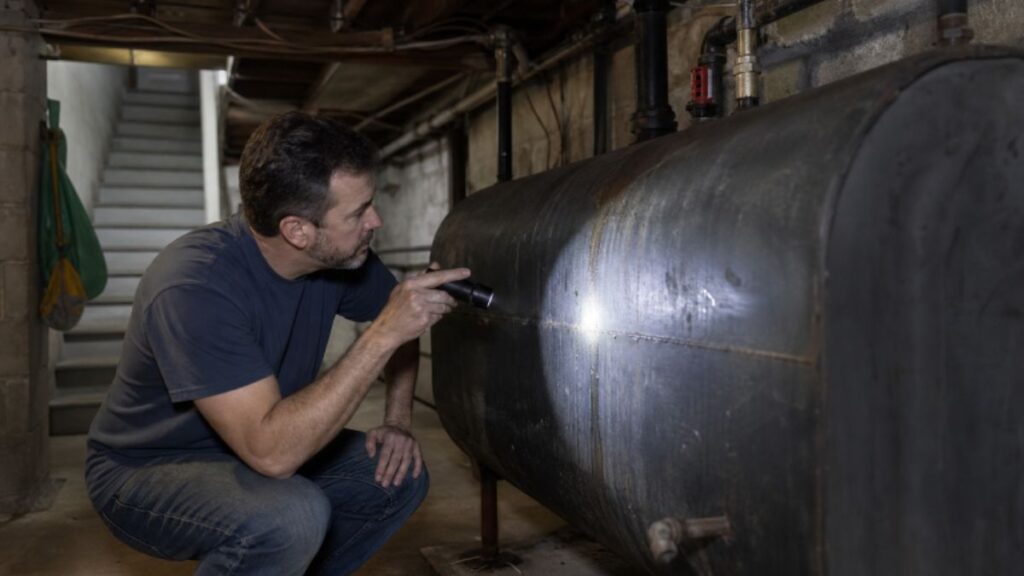
- Inspect the tank surface, seams, fittings, fuel lines, legs, and supporting base.
- Look for rust, dents, wet spots, dark staining, peeling paint, or an unusual fuel-oil odor.
- Make sure fill and vent pipes are visible and not blocked by snow, ice, landscaping, leaves, or debris.
- Check that the fuel gauge appears secure and readable, then confirm delivery information is accurate.
- Look closely around filters, valves, and line connections for drips or residue.
- Write down the inspection date, observations, and any service calls in one dedicated record.
- Contact a qualified provider before the next delivery if anything appears damaged, unstable, or unfamiliar.
Warning Signs That Need Attention
Aboveground Tank Signs
- Rust that appears heavy, widespread, flaky, or concentrated near the bottom of the tank.
- Tank legs that are bent, loose, uneven, or no longer firmly supported.
- Oil around the filter, valve, fuel line, or tank bottom.
- Persistent oil odor in a basement, garage, or near an outdoor tank.
- Staining or damaged vegetation near an exterior tank or piping route.
Underground Tank Signs
- An old fill pipe or vent pipe with no clear documentation of tank removal or closure.
- Oil odor near a basement sump, drain, yard area, fill pipe, or vent pipe.
- Fuel use that seems inconsistent with normal weather, occupancy, and heating patterns.
- Unexplained soil staining, excavation marks, or evidence of prior tank work.
- Repeated odors inside the home without an identified source.
Do not dig, cut pipes, move a tank, or attempt to open a suspected buried tank without professional direction. Fuel vapors, concealed piping, structural conditions, and potential soil impacts require a more deliberate approach.
Extra Concerns With Underground Tanks
Buried tanks are harder to evaluate because much of the equipment cannot be seen. An abandoned fill pipe does not, by itself, establish whether the tank was removed or properly closed. When records are unclear or a release is suspected, a qualified environmental professional may recommend a site evaluation or sampling based on the property’s conditions.
The EPA explains that preventing and detecting underground tank releases involves safeguards against corrosion, spills, overfills, and undetected releases. While residential heating tanks can be subject to different requirements than regulated commercial systems, the basic lesson remains useful: a buried tank needs a documented plan, not assumptions.
Records to Keep for Repairs and Home Sales
A complete paper trail helps homeowners, buyers, inspectors, insurers, and contractors understand what is on the property. Keep installation, inspection, repair, removal, and in-place abandonment documents. Save invoices, dated photographs, spill reports, laboratory results, disposal paperwork, and soil or groundwater findings. Record the tank’s location, approximate age, capacity if known, material, and current status.
For a future sale, unclear tank history may lead to additional questions during inspections, financing, insurance review, or closing. Written details from each contractor visit are more useful than relying on memory or an old verbal explanation.
When to Repair, Replace, Remove, or Abandon a Tank
- Repair: This may be considered for a limited, documented issue when the tank itself remains sound. Ask whether the repair addresses the cause of the problem and what records will be provided.
- Replacement: This may make sense when corrosion, unstable supports, age, or repeated service issues create concern. Ask about placement, tank type, protective features, and removal of the old equipment.
- Removal: This is often considered when a tank is no longer needed or presents a property risk. Confirm how the tank, remaining oil, connected lines, and any affected materials will be handled.
- In-place abandonment: This may be considered where removal is impractical because of access, nearby structures, or site conditions. Ask what closure steps, approvals, documentation, and testing may apply.
What to Do If a Spill or Strong Odor Appears
- Stop using the heating system if it is safe to do so.
- Keep people and pets away from the affected area.
- Avoid flames, sparks, and unnecessary electrical activity near heavy fumes.
- Do not use water or household cleaners to spread or wash away oil.
- Contact the fuel supplier, insurer, and appropriate state authorities promptly.
- Take photographs and record when and where the issue was discovered.
- Follow instructions from emergency personnel and environmental professionals.
Common Homeowner Questions
How Often Should a Heating Oil Tank Be Checked?
Perform a visual check at least annually and after flooding, storm damage, delivery concerns, unusual odors, or visible changes around the tank and lines.
Does Replacing a Heating System Solve an Old Tank Problem?
No. Switching to another heating source does not automatically remove the risk or responsibility associated with an unused tank, old lines, or abandoned fill pipes. A documented closure decision is still important.
What Should Buyers Request Before Purchasing a Home?
Request tank inspection reports, removal or abandonment records, repair invoices, spill documentation, photographs, and any soil or groundwater test results. These records can clarify whether further review is needed before closing.
Conclusion
Heating oil tank safety begins with simple observation, good records, and prompt action when something changes. For Kaser homeowners, a short annual inspection can reveal corrosion, damaged piping, unstable supports, or signs that an older tank deserves closer review. When a concern involves a buried tank, visible oil, strong odors, or an uncertain property history, pause any do-it-yourself work and obtain qualified guidance.