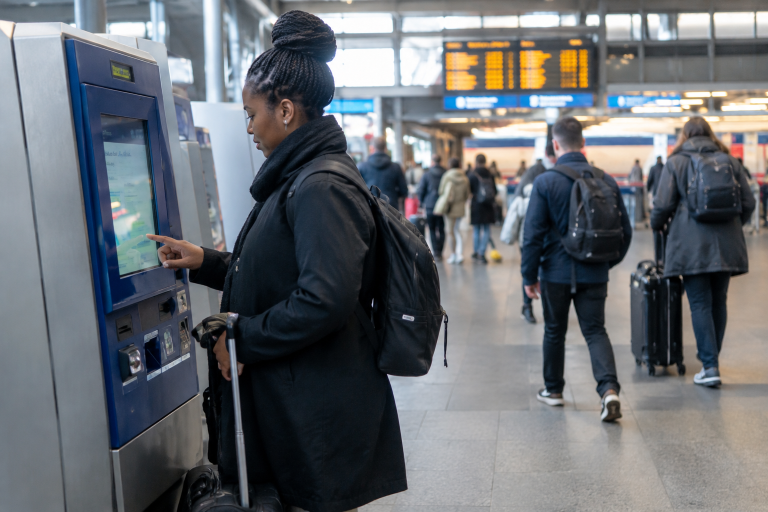
Airports, rail stations, bus terminals, cruise ports, and other travel hubs are built around time-sensitive decisions. Travelers may be navigating an unfamiliar building, carrying luggage, managing children, responding to a service disruption, or trying to make a connection. Well-designed airport self-service technology can help people complete routine tasks quickly while preserving staff capacity for problems that require judgment and personal assistance.
The goal is not to replace every human interaction with a screen. It is to create a journey that is easy to understand, accessible to a wide range of travelers, and dependable as conditions change. A useful self-service experience gives passengers clear choices, confirms what happened, and makes help easy to find.
Table Of Contents
- Why Self-Service Matters At Busy Travel Hubs
- Start With Passenger Needs, Not Devices
- Remove Common Sources Of Friction
- Make Wayfinding Clear And Timely
- Design For Accessibility And Different Abilities
- Balance Automation With Human Support
- Protect Traveler Data And Privacy
- Connect Digital And Physical Services
- Measure The Results That Matter
- A Practical 2026 Implementation Checklist
Why Self-Service Matters At Busy Travel Hubs
Travel hubs create pressure because many passengers need answers simultaneously. They may need to buy a ticket, print a boarding document, pay for parking, find a platform, check a gate change, or locate an accessible route. When those tasks are simple and clear, staff can focus on missed connections, exceptions, safety concerns, and travelers who need more direct support.
Consider a passenger arriving late for a train. They should be able to see the next departure, pay using a familiar method, receive confirmation, and get directions to the platform without visiting multiple counters. Self-service succeeds when it reduces uncertainty instead of shifting extra work onto the traveler.
Start With Passenger Needs, Not Devices
A kiosk, scanner, app, or payment terminal is only valuable when it solves a real problem. Begin by mapping the full journey from arrival through departure or transfer. Look for points where people wait, backtrack, ask the same question repeatedly, abandon a transaction, or become unsure about the next step.
Separate tasks that are appropriate for self-service from those that require staff judgment. Testing should include frequent travelers, first-time visitors, families, older adults, people with limited digital confidence, and passengers managing bags or mobility aids. Their feedback will reveal problems that may not appear in a conference-room demonstration.
 Remove Common Sources Of Friction
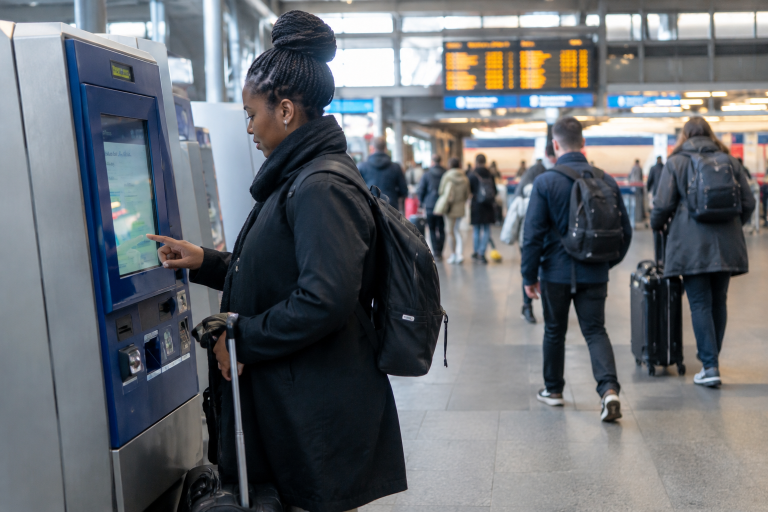
Small obstacles can make a straightforward transaction feel difficult. Common examples include repeated data entry, unfamiliar terms, long forms, unclear payment errors, and a lack of confirmation after a task is complete. A traveler should never have to guess whether a ticket was issued, a payment was accepted, or a request was submitted.
A Simple Interaction Model
- State what the service can help the traveler do.
- Request only the information needed for that task.
- Show a clear review step before final submission or payment.
- Provide a receipt, reference number, or visible next action.
- Offer a direct path to staff assistance if something goes wrong.
Make Wayfinding Clear And Timely
Directions work best when they appear before a passenger reaches a decision point. Signs, maps, interactive displays, mobile tools, and staff instructions should use the same labels for gates, platforms, exits, restrooms, elevators, and transfer areas. Short language, familiar symbols, readable type, and strong contrast all reduce hesitation.
Wayfinding also needs to reflect current operations. If a platform, gate, route, or boarding area changes, passengers should receive the same update across every relevant channel. Showing walking time can also help travelers make better decisions, especially in large terminals where a destination may be farther away than it appears.
Design For Accessibility And Different Abilities
Accessibility belongs in the first design review, not as a post-launch correction. Controls should be reachable, text should be readable, and each interaction should allow sufficient time for a traveler to review information. Captions, audio support, language choices, clear contrast, and simple wording can improve usability for many people, not only those who identify as having a disability.
Every self-service path should also have an accessible alternative. Travelers using wheelchairs, canes, service animals, strollers, or luggage carts may need more space or a different route. A process that works only for one type of passenger is not a complete passenger service.
Balance Automation With Human Support
Even the best-designed flow will encounter exceptions. Payment failures, identity questions, missed connections, accessibility needs, and system outages require a fast escalation path. Visible help buttons, call points, video assistance, or nearby employees can keep a minor issue from becoming a missed trip.
Staff should be trained to guide travelers without automatically taking over the transaction. Their observations are especially valuable because recurring questions often reveal unclear language, poor placement, or a missing step in the self-service journey.
Protect Traveler Data And Privacy
Passenger trust depends on collecting only the information needed for a specific service and explaining why it is requested. Payment, identity, and travel details should be handled through secure systems with controlled access. Travelers should also have a clear alternative when they do not want to use biometric or fully digital processing.
For example, travelers at Philadelphia International Airport can choose a standard inspection process rather than use its enhanced passenger processing option. That choice illustrates an important principle: speed and convenience should not eliminate a passenger’s ability to select another supported path.
Connect Digital And Physical Services
Passengers should not need to start over when moving from a website to an app, a kiosk, a ticket machine, or a service counter. Schedules, maps, fares, confirmations, and alerts should remain consistent across touchpoints. A reference code or saved trip should help a traveller continue the same task where practical.
Design for real-world limitations as well. Phones lose power, mobile signals can be weak, and some travelers do not use smartphones. Printed receipts, physical signage, staffed counters, and offline alternatives remain important parts of an inclusive service model.
Measure The Results That Matter
Device usage alone does not show whether a journey improved. Track average transaction time alongside completion rates, abandoned sessions, repeat visits to the same service point, payment errors, failed scans, requests for help, and passenger feedback. Review accessibility complaints and successful assisted interactions as part of the same picture.
Faster is not always better. A short transaction that leaves travelers unsure where to go next can create congestion elsewhere. The strongest measures combine efficiency with confidence, clarity, and successful completion.
A Practical 2026 Implementation Checklist
- Choose one high-volume passenger task to improve first.
- Document the existing journey from start to finish.
- Remove unnecessary steps before adding technology.
- Test with varied passenger groups in realistic conditions.
- Include accessibility, privacy, and support reviews early.
- Connect the experience to live schedules, payment systems, and service channels.
- Launch a small pilot and monitor real passenger behavior.
- Use errors, wait times, support requests, and feedback to refine the service.
A pilot is particularly valuable for high-impact entry points. CTA’s effort to test faregate technology in its operating environment reflects why agencies should evaluate usability, accessibility, resilience, and integration before expanding a new solution across a larger network.
Conclusion
The best self-service journey feels simple, predictable, and optional. Transportation hubs can improve passenger flow by prioritizing clear information, accessible design, reliable systems, privacy choices, and quick human assistance. In 2026, successful automation is not about removing people from every interaction. It is about removing avoidable friction and giving every traveler a clear path forward.