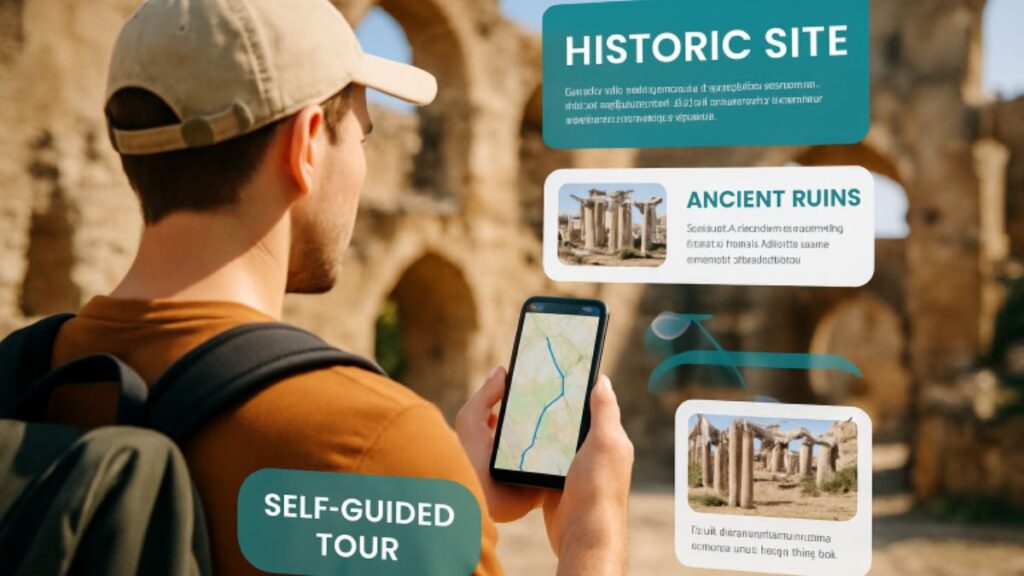
Travel is evolving, and more people are seeking flexible, independent ways to explore the world. The digital age offers an abundance of options for exploring cities, historical landmarks, and cultural sites at a traveller’s own pace, supported by technology that makes every step intuitive and informative. The surge in self guided walking tours reflects how travellers now crave autonomy and personalized experiences.
Innovations such as mobile apps, AI-driven recommendations, and augmented reality have enabled deeper, richer engagement with destinations. This new era allows travellers to shape their journeys to fit their interests, budgets, and schedules, fundamentally shifting how we experience travel. No longer are travellers tied to large-group tours or rigid itineraries; instead, technology empowers curiosity and encourages discovery in ways unimaginable just a decade ago.
The Rise of Self-Guided Tours
The global appetite for self-guided travel is rapidly increasing. Modern travellers are seeking freedom, flexibility, and more control over their itineraries, which self-guided tours provide. These tours often use GPS-enabled devices or mobile apps that offer audio narration, interactive maps, and rich multimedia content, allowing travellers to access high-quality experiences without a guide. According to GlobeNewswire, the market for self-guided audio tours alone is expected to reach $4.8 billion by 2031, up from $1.5 billion in 2023. This boom is due in part to innovative technologies like geofencing, which automatically triggers relevant audio or multimedia content at points of interest as travellers move through a destination.
AI and Personalized Travel Experiences
Artificial Intelligence has emerged as a powerful force in reshaping travel experiences. Algorithms now analyze user data to tailor recommendations, create bespoke itineraries, and help suggest hidden gems based on past travel behaviours and stated preferences. Major travel platforms, such as Expedia and TripAdvisor, are leveraging AI to offer personalized restaurant, museum, and attraction recommendations. For many travellers, this means less time researching and more time exploring sites that truly resonate with their interests and travel goals. Customization has become a key driver of satisfaction, enabling journeys that feel unique and personal.
Augmented Reality Enhancing Exploration
Augmented Reality technology is bringing destinations to life in ways that books and static guides never could. AR-enabled apps add interactive digital layers to the real world, allowing travellers to view 3D recreations of historical events, translated signage, or even see architects’ original visions for famous buildings as they stand in front of them. Leading museums and cities offer AR experiences that guide users through neighbourhoods, enriching each step with visual and auditory context. For example, the Louvre Museum has partnered with Snapchat to create an innovative interpretation tool for six of the museum’s departments, available from February 2026. Visitors can use their smartphones to bring these works to life, revealing their secrets and restoring their long-lost shapes and colours. This free visitor experience was designed by the AR Studio of Snapchat, in close collaboration with curators from the Musée du Louvre, and using both archival records and the latest academic research.
Smart Tourism and Crowd Management
The spike in travel popularity has brought attention to the challenges of over tourism. Popular attractions are often crowded during peak seasons, diminishing the quality of visitor experiences. Many cities now implement “smart tourism” initiatives: these use real-time data analysis to predict visitor flows and help disperse crowds. Apps may suggest alternate times to visit top sights or reroute travelers to less-congested routes, creating smoother journeys for everyone. Cities like Amsterdam and Barcelona have adopted such strategies not only to protect their cultural heritage but also to foster more sustainable and pleasant tourist experiences.
Immersive Experiences Through Technology
The demand for authentic and immersive travel has skyrocketed as people seek deeper connections with local cultures. Technology is bridging this gap by offering enhanced, interactive options. For instance, digital guides can lead visitors on thematic tours such as culinary walks or explorations of local design districts, complete with audio stories, video interviews with designers, and expert tips on what to see and do. These tools unlock opportunities to discover neighbourhoods and experiences that might otherwise remain unknown, allowing for a richer, more nuanced understanding of a destination.
Challenges and Considerations
While technology enriches travel, it also introduces certain risks and complications. Travelers can become overly dependent on their devices, which may fail due to depleted batteries or poor connectivity, leading to interruptions in their journeys. Privacy is another significant concern since travel apps often collect large amounts of personal information, making them potential targets for data breaches if not adequately secured. Responsible travel requires users to be aware of these risks and take proper precautions, such as using trusted apps and securing their digital data.
The Future of Self-Guided Tours
The landscape of self-guided travel is poised for further innovation. AI-driven virtual assistants are expected to become more sophisticated, offering voice-activated, context-aware support throughout a traveller’s journey. Meanwhile, AR will intersect even more deeply with travel, delivering dynamic content and immersive storytelling in real time. These trends will make experiences more adaptive, entertaining, and educational, providing travellers with opportunities tailored to their interests and needs.
Final Thoughts
As travellers continue to embrace technology, self-guided tours will only grow in popularity, enriching journeys with convenience, customization, and creativity. Adapting to these advancements will bring about more fulfilling and memorable travel experiences for everyone.