The Role of Prior Convictions in New Criminal Cases
Prior criminal convictions are among the first things courts review when a person faces new charges. Previous offenses often shape a judge’s or prosecutor’s assessment of an individual’s character and can dramatically change how a new case is handled. Prosecutors may aggressively pursue harsher penalties and bring up your past in court to demonstrate a pattern of repeat behavior. With so much at stake, defendants must seek proper legal counsel early in the process. Individuals seeking legal information or support can visit martinlawfirmpc.com to gain a better understanding of their legal options and rights.
Not only do prior convictions influence court perception and prosecutor strategy, but they can also trigger statutory enhancements that transform otherwise minor sentences into major ones. For example, repeat offenders may find themselves facing mandatory minimums, even for new, non-violent offenses, due to their history. This reality underscores the importance of understanding how criminal records follow individuals and shape every subsequent encounter with the justice system.
Impact on Sentencing and Penalties
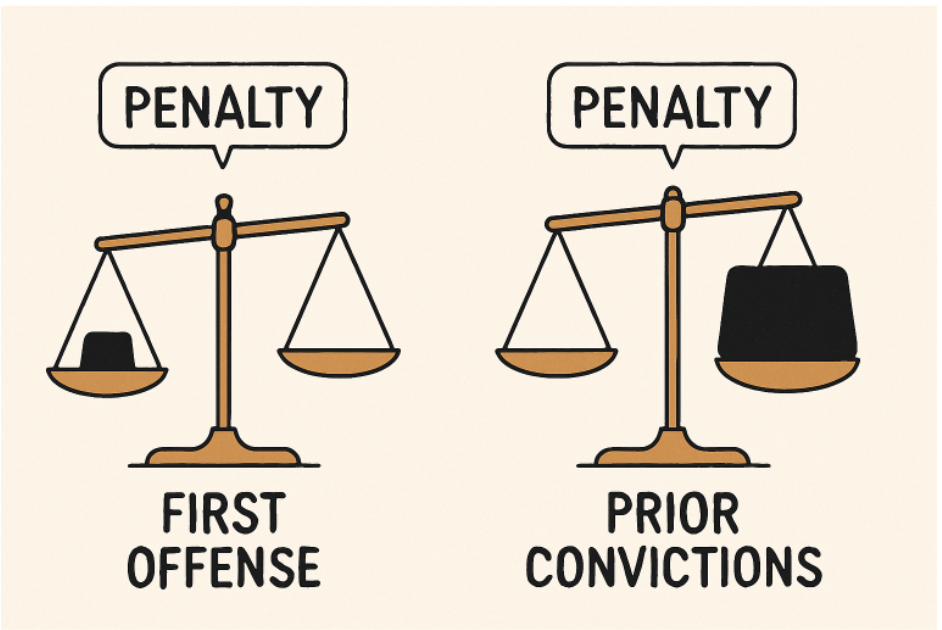
Sentencing is one of the most significantly impacted phases when prior convictions are taken into account. In states like California, the “Three Strikes Law” imposes life sentences on anyone convicted of three or more serious felonies, representing an extreme example of sentence enhancement. Meanwhile, states such as Georgia employ recidivist statutes that force judges to impose longer prison terms, especially on defendants with repeat felonies. Even non-violent prior convictions can increase sentences, raise fines, and eliminate parole opportunities.
Typically, judges have less flexibility when sentencing repeat offenders due to mandatory minimums and statutory enhancements. This can drastically alter the outcome of a case, making even a seemingly minor charge life-altering for someone with a prior record. According to data from the National Institute of Justice, recidivism rates remain high, further fueling legislative efforts to penalize repeat offenders more harshly.
Influence on Bail and Plea Bargains
A person’s criminal record can have a significant impact on pretrial decisions, such as bail. Courts tend to view repeat offenders as higher risks for fleeing or reoffending, making them more likely to face high bail amounts or even denial of bail altogether. In these scenarios, the likelihood of remaining in custody while awaiting trial increases, adding more pressure to accept plea deals.
Prior convictions also shift the balance in plea negotiations. Prosecutors may view those with a criminal history as less deserving of leniency, resulting in less favorable plea agreements—usually involving longer sentences, more restrictive probation terms, or heavier fines. A history of prior offenses can also persuade prosecutors to charge new offenses more aggressively, making the situation exponentially more difficult for repeat offenders.
State-Specific Laws and Enhancements
Approaches to prior convictions vary considerably from state to state. For example, Arizona’s laws allow for substantial enhancements when a person is convicted of a second or subsequent violent felony, including possible life imprisonment. Other states have unique “habitual offender” statutes or tiered enhancements that escalate penalties based on the recency and seriousness of previous convictions. Understanding the specific laws of your state is essential, as they can dictate the potential consequences from the moment new charges are filed.
Beyond prison terms, state laws also impact parole eligibility, probation restrictions, and post-release limitations, all of which are influenced by an individual’s prior record. It’s vital to review how local and state statutes interact with criminal records before navigating a new case. For more information, see the Legal Information Institute’s resources on three-strikes laws.
Legal Strategies to Mitigate the Impact of Prior Convictions
Record Sealing and Expungement
Many states offer mechanisms for sealing or expunging prior convictions under specific circumstances, thereby removing them from public view and, in some cases, preventing them from being used to enhance future sentencing. This legal relief is especially valuable for individuals seeking to mitigate the impact of a criminal record on future charges and life opportunities.
Exclusion Motions
Defense attorneys may file motions to exclude certain prior convictions from being cited in a new criminal case, arguing they are too old, irrelevant, or overly prejudicial. These strategies don’t always succeed, but they can substantially affect the outcome if a court agrees that prior evil acts should not be considered.
Recent Legislative Changes and Their Implications
Lawmakers are increasingly reevaluating the impact of prior convictions on new criminal cases. For example, in 2024, Massachusetts approved sweeping pardons for individuals with misdemeanor cannabis convictions. These pardons mean such offenses cannot contribute to future sentence enhancements for many residents, reflecting a broader trend toward rethinking the long-term impacts of past non-violent crimes in the justice system.
These reforms are part of larger criminal justice efforts to provide second chances and reduce some of the punitive aspects of habitual offender laws, which have long faced criticism for disproportionately affecting marginalized communities. For more on how criminal justice reform impacts sentencing, consult recent reports from The Pew Charitable Trusts.
Conclusion
The effect of prior convictions on new charges cannot be overstated. They play a defining role in every stage of the process—from initial hearings to sentencing and parole. It is critical for individuals with a criminal history to consult knowledgeable attorneys early on and to be aware of legal relief mechanisms, recent legislative changes, and the nuances of their state’s laws. Staying informed can make a substantial difference in protecting your rights and future.