Introduction
Boulder, Colorado, is renowned for its scenic views and rich cycling culture, attracting riders from across the nation. The city’s network of bike paths and emphasis on active transportation make it a haven for cyclists who value both recreation and environmentally friendly commuting. Yet, as city streets grow busier and more people take up cycling, an unsettling truth persists—careless motorists increasingly threaten cyclist safety. Every day, local riders face preventable dangers due to a lack of driver attention or disregard for cycling laws. The rise in both vehicle traffic and cycling activity has heightened interactions—and thus, potential points of conflict—between cars and bikes. For cyclists dealing with the aftermath of an accident, consulting a Boulder bicycle injury lawyer becomes a critical step in protecting their rights and recovering damages, as legal support can help victims navigate insurance claims and medical expenses after a crash.
This issue is not unique to Boulder, but the city’s commitment to cycling makes it particularly visible here. Concerned stakeholders, including government officials, advocacy groups, urban planners, and ordinary residents, are recognizing that the cost of inaction is too great. As Boulder’s reputation as a cycling destination continues to grow, so too does the centrality of cycling-related safety within community discourse. Addressing negligent driving has thus become a rallying point for action to enhance safety, prevent future tragedies, and support Boulder’s vibrant cycling scene through education, advocacy, and robust legal protections.
Understanding Negligent Driving
Negligent driving refers to behaviors in which motorists fail to uphold their duty of care on the road, thereby placing others—especially vulnerable road users, such as cyclists—at risk. Unlike intentional acts of harm, negligence is often rooted in a lack of vigilance or simple disregard for established rules. Specifically, common forms of negligent driving include:
- Distracted Driving: Whether it’s checking a text, adjusting navigation, or eating, actions that divert a driver’s focus from the road pose significant risks to everyone nearby. The moment a motorist’s attention drifts, even for just a few seconds, they become less able to detect and respond to cyclists sharing the road.
- Speeding: Going over the posted speed limit not only reduces reaction time but also amplifies the consequences of a collision, making injuries to cyclists more severe. High speeds increase stopping distance and make it harder for motorists to yield or react to unexpected movements from cyclists.
- Failure to Yield: Intersections and crosswalks are danger zones when drivers don’t yield the right of way. Cyclists are particularly at risk at these locations, where a momentary lapse or failure to notice a bike can lead to serious, sometimes fatal, incidents.
Studies by the National Highway Traffic Safety Administration (NHTSA) highlight that distracted driving alone causes thousands of injuries and fatalities nationwide each year, with cyclists being overrepresented among vulnerable road users. These preventable behaviors often leave cyclists facing life-altering injuries or psychological trauma, underscoring the need for greater public awareness and enforcement of safety laws.
Impact on Cyclist Safety
Recent data paints a sobering picture of the risks faced by cyclists in Boulder. In 2023, the city documented 55 severe crashes, with nearly half involving either cyclists or pedestrians. These figures highlight the vulnerability of riders to drivers who fail to pay attention or adhere to road rules. Cyclists lack the protective enclosure of a vehicle, so what might be a minor “fender bender” between cars can have devastating outcomes when bicycles are involved. The physical and psychological toll on injured cyclists—and the larger ripple effect on Boulder’s active community—cannot be underestimated. Injuries can result in long-term or permanent disability, lost income, and high medical costs. Families and friends of cyclists also experience emotional distress after crashes.
According to the National Safety Council, the cost of bicycle-related injuries and deaths in the U.S. exceeds $24 billion annually. Such staggering figures make it clear that the issue extends well beyond individual incidents, representing a major public health and economic concern. A single negligent act by a motorist can have far-reaching consequences, affecting not only victims and their families but also the broader sense of safety that empowers cyclists to ride confidently in their communities.
Legal Framework and Enforcement
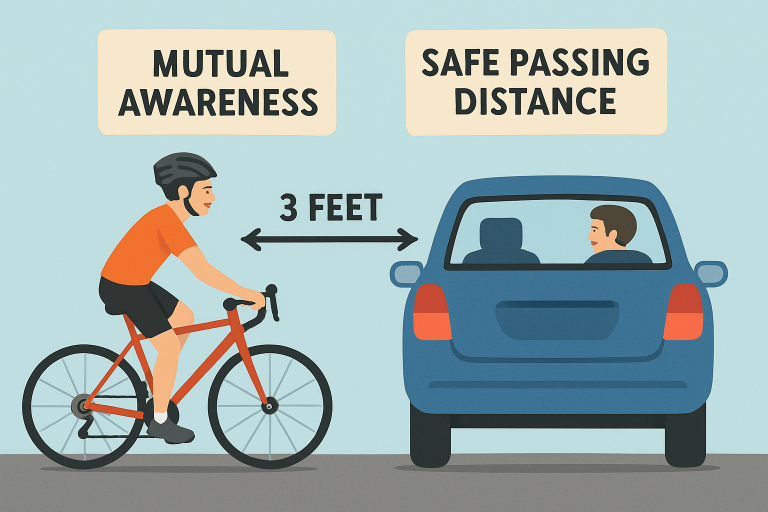
To protect cyclists, Colorado law requires motorists to leave at least three feet of space when passing a rider. This law helps safeguard cyclists from the dangers of being sideswiped or clipped by passing vehicles. Additionally, the state’s “Safety Stop” law lets cyclists treat stop signs as yield signs, aiming to reduce unnecessary stops and improve cyclist flow through intersections while prioritizing safety.
Despite these forward-thinking laws, inconsistent enforcement remains a challenge. Cyclists often report close calls, aggressive behavior, and violations of the three-foot passing rule. Law enforcement’s ability and willingness to hold negligent drivers accountable can vary based on resources, training, and public attitudes. Stricter penalties for violations that endanger cyclists, better driver education, and regular law enforcement campaigns are needed to ensure meaningful change. When motorists perceive that there are real consequences for negligent driving, they are less likely to engage in risky behaviors. At the same time, clearer legal pathways for injured cyclists to seek compensation promote a culture of accountability and safety for all road users.
Infrastructure Challenges
Boulder has been proactive in installing protected bike lanes, updating roadways, and investing heavily in infrastructure designed to create safer travel corridors for cyclists. Designated bike lanes and greenways physically separate cyclists from vehicles, minimizing points of conflict and improving overall traffic flow. However, not all infrastructure upgrades achieve their intended effect. Some, like the winding, speed-bumped design on Baseline Road, have sparked controversy and even contributed to new cyclist crashes. Residents and local cycling groups have raised concerns about visibility, abrupt lane changes, and the challenges faced by riders of different skill levels.
Continuous assessment and input from both cyclists and traffic safety experts are crucial to refining these spaces and minimizing hazards. Cities must adopt a data-driven approach to identify the most effective solutions, revisiting completed projects as necessary to maximize safety. Well-maintained, thoughtfully designed infrastructure serves as one of the most powerful tools for reducing conflict and encouraging more people to choose cycling as their primary mode of transportation.
Final Thoughts
Negligent driving is a persistent threat to Boulder’s cyclists, but it is not an insurmountable one. By fortifying legal protections, enhancing infrastructure, and supporting community-engaged advocacy, Boulder can advance toward safer roads and a brighter, more inclusive future for all road users. Progress will depend on a holistic approach, where education, enforcement, and engineering work in tandem. Addressing these challenges requires collaboration and sustained attention, but it is a vital investment in the health, safety, and vitality of Boulder’s cycling community. Every initiative taken to curb negligent driving represents a crucial step toward ensuring that every ride in Boulder begins and ends with safety and peace of mind.