
Introduction to Financial Valuation
Financial valuation is the process through which the present value of an asset, company, or investment is determined using standardized methodologies and data-driven estimations. Mastering valuation is a vital skill for investors, entrepreneurs, and finance professionals, as it provides a foundational basis for decisions related to mergers, acquisitions, investments, and financial reporting. Understanding valuation methods not only sharpens strategic thinking but also improves negotiation power in business dealings.
To build expertise in these areas, many turn to programs such as the financial modeling and valuation analyst course, which covers essential models and tools needed to assess and interpret valuation outcomes. Effective valuation is more than just technical calculations—it encompasses market understanding, critical analysis, and the ability to assess what future financial prospects might look like.
The practical application of valuation principles enables individuals and organizations to measure potential returns, assess risk exposure, and evaluate the impact of different strategic opportunities. For example, private equity investors use valuation models to evaluate startups that are shrouded in uncertainty. At the same time, publicly traded companies are regularly valued by analysts who track their shares and forecast their growth prospects.
Understanding valuation is also important for complying with financial reporting standards and ensuring transparency for shareholders. According to a report by The Wall Street Journal, investors and regulatory bodies are increasingly scrutinizing company valuations to ensure the reliability and robustness of reported financials.
 Common Valuation Methods
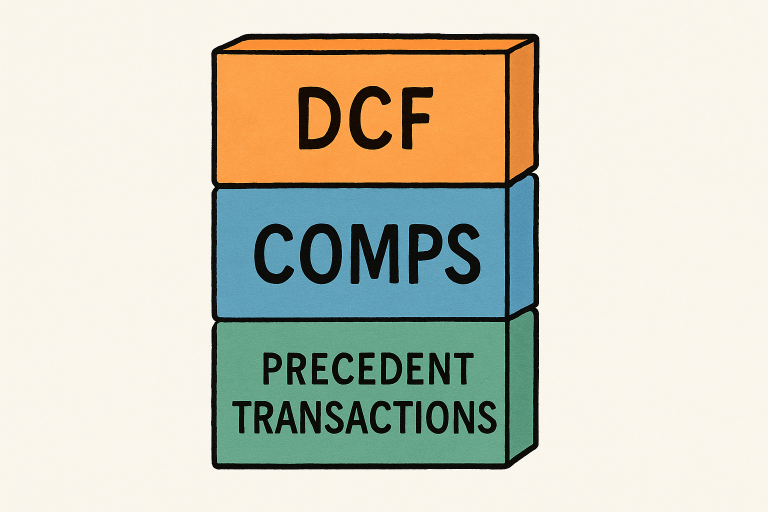
Three primary methodologies dominate financial valuation scenarios. Gaining familiarity with each approach provides a multidimensional perspective on assessing worth:
- Discounted Cash Flow (DCF) Analysis: Arguably the most rigorous analytical method, DCF values a business based on its future expected cash flows, which are projected and then discounted back to present value using a suitable rate. This method is highly regarded for its logical focus on intrinsic value and long-term financial performance.
- Comparable Company Analysis: This technique, also known as “comps,” involves comparing the business to other publicly traded firms of similar size and operating in the same sector. Analysts use financial metrics, such as the Price-to-Earnings (P/E) ratio or Enterprise Value to EBITDA, to establish a valuation range.
- Precedent Transactions Analysis: In this approach, historic deals involving similar companies are dissected to identify relevant transaction multiples and trends. This method is especially useful for merger and acquisition deals, as it reflects real market prices buyers have been willing to pay.
When to Use Which Method
The best valuation results often come from using multiple methods together. For example, DCF is ideal for companies with stable cash flows. At the same time, comps and precedent transactions are more helpful when real market data is essential, such as during acquisition negotiations or when valuing startups without a steady profitability track record.
Key Components of DCF Analysis
Discounted Cash Flow analysis is widely utilized for its robust, principle-based logic, but requires considerable input data and several major judgments. Understanding its building blocks is crucial:
- Projecting Future Cash Flows: This involves forecasting the amount of money the company will generate after accounting for operational and capital expenses over the next several years. Accuracy in this context depends on a thorough understanding of the business environment, market conditions, and competitive dynamics.
- Determining the Discount Rate: The discount rate typically reflects the Weighted Average Cost of Capital (WACC), which accounts for the riskiness of the business and the expected return for both lenders and investors. An incorrect discount rate may lead to overvaluation or undervaluation.
- Calculating Terminal Value: Since forecasting far into the future is unreliable, most DCF models use a perpetuity growth model to estimate a single value for all future cash flows beyond the explicit forecast horizon. This terminal value often contributes a significant portion of the total enterprise value.
- Discounting Cash Flows: All projected values must be discounted back to their present value, allowing a fair comparison against other investment opportunities available in today’s terms.
Combining these components requires both analytical rigor and practical judgment regarding future industry conditions.
Challenges in Valuation
Despite the structured frameworks, valuation remains inherently subjective due to the reliance on forecasts and assumptions. For instance, small changes in projected growth rates or discount rates can have outsized effects on calculated values. Market volatility, evolving competitive landscapes, and regulatory uncertainties can all significantly impact inputs and outcomes.
To deal with the inherent unpredictability, financial professionals routinely conduct sensitivity analyses. This involves adjusting variables to observe their impact on valuation results, thereby highlighting the range of possible outcomes and associated risks.
Real-World Application
To see these techniques in action, imagine a software startup seeking its first large round of investment. Investors and founders frequently build DCF models, review comparable company multiples, and analyze recent deals for similar businesses. Suppose the DCF model predicts robust cash flow growth; this could justify a higher pre-money valuation for the startup, helping founders raise capital at more favorable terms. Conversely, if industry comps suggest significant undervaluation relative to peers, it may create an attractive buying or investment opportunity for new investors.
These structured approaches also apply when selling a family business, issuing new shares, or even for internal management decisions about capital allocation, highlighting how core valuation skills underpin a broad range of practical scenarios.
Final Thoughts
Building a solid understanding of financial valuation techniques is essential for anyone involved in investments, entrepreneurship, finance, or corporate strategy. A reliable valuation not only clarifies the potential value of opportunities but also enhances business negotiation and decision-making processes. Combining methods, testing assumptions, and staying mindful of limitations yields more confident and informed outcomes in an ever-changing financial landscape.