Somewhere between the obsession with click-through rates and the constant churn of social media algorithms, a lot of businesses quietly forgot about the pavement. The physical world – the one where people actually live their lives, drive to work, and stand waiting for buses in the rain. Billboard advertising never went away, but it’s having a big moment right now, and the reasons why are more interesting than you’d expect.
Digital advertising fatigue is real; people are using ad blockers more than ever before, scrolling past sponsored posts without even looking at them, and increasingly paying for streaming services just to avoid ads – but you can’t block billboards on a dual carriageway. That isn’t a gimmick, it’s a simple fact about how outdoor media works, and it’s part of why brands of all sizes are circling back to formats many dismissed years ago as old-fashioned.
What Makes a Billboard Work
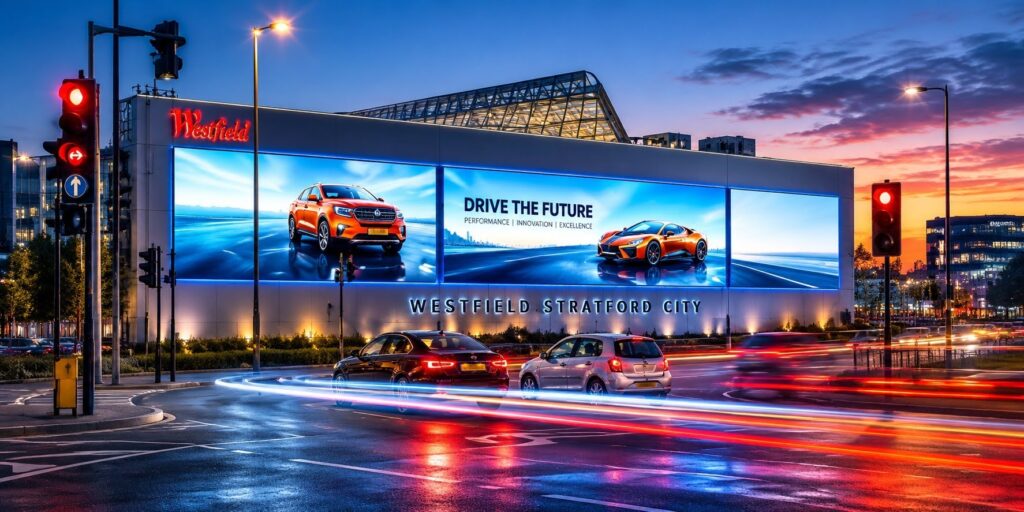
Location is everything, of course, but the creativity matters more than people tend to give it credit for. You have roughly three seconds to land a message on someone driving past at 40mph, which forces a discipline that digital advertising doesn’t often need. No room for a wall of text, and no second chance to explain yourself. Either the image and the line work together immediately, or they don’t work at all.
The brands that get it right tend to be the ones who treat the medium seriously rather than just repurposing a social media graphic and calling it a day. There’s a reason some outdoor campaigns become genuinely talked-about, not because they spent a fortune, but because they respected the format enough to think about it properly.
Targeting has also improved considerably. Outdoor isn’t the scattergun exercise it once was. Traffic data, footfall analysis, and audience profiling mean that choosing a site now involves a lot more rigour than just picking a busy road and hoping for the best. Whether you’re a local business trying to reach people within a five-mile radius or a national brand building awareness across a region, the planning process has got sharper.
The Case for Local and Regional Campaigns
There’s a tendency to assume billboard advertising is only for big brands with serious budgets. That assumption is increasingly outdated. The rise of regional providers and more flexible booking options has opened up outdoor media to businesses that wouldn’t have considered it a decade ago. A restaurant in Sheffield, a gym in Bristol, a letting agent in Norwich; these are exactly the kinds of businesses that can benefit from consistent visibility in a specific local area, and the cost per thousand impressions is often competitive with digital channels once you factor in actual attention rather than passive scrolling.
Priority Outdoor billboards operate across a range of UK locations, and they’re a good example of how regional outdoor providers are positioning themselves for exactly this kind of local and mid-size business activity. The ability to book specific sites, understand audience data for those sites, and plan campaigns without needing a massive agency infrastructure behind you has genuinely changed what’s accessible.
The format also lends itself well to brand consistency over time. Running a billboard in the same area for several months builds a kind of ambient familiarity that’s hard to replicate digitally. People start to recognise a brand before they’ve consciously noticed they’ve seen the advert twelve times. That’s not magic, it’s just repetition doing its job.
Is It Worth It for Smaller Budgets
Honestly, it depends what you’re trying to achieve. If you need direct response with trackable conversions today, outdoor probably isn’t your first move. But if you’re building brand recognition in a local area, trying to establish credibility, or launching something new to a specific community, the case stacks up better than most people assume.
The businesses that get the most out of it tend to combine outdoor with other activity rather than treating it as a standalone solution. A billboard that supports a local radio ad, reinforces a social media push, or drives people to something specific tends to outperform one that’s just sitting there hoping someone writes down a phone number. Most people don’t write down phone numbers from billboards. They do, however, remember names.