
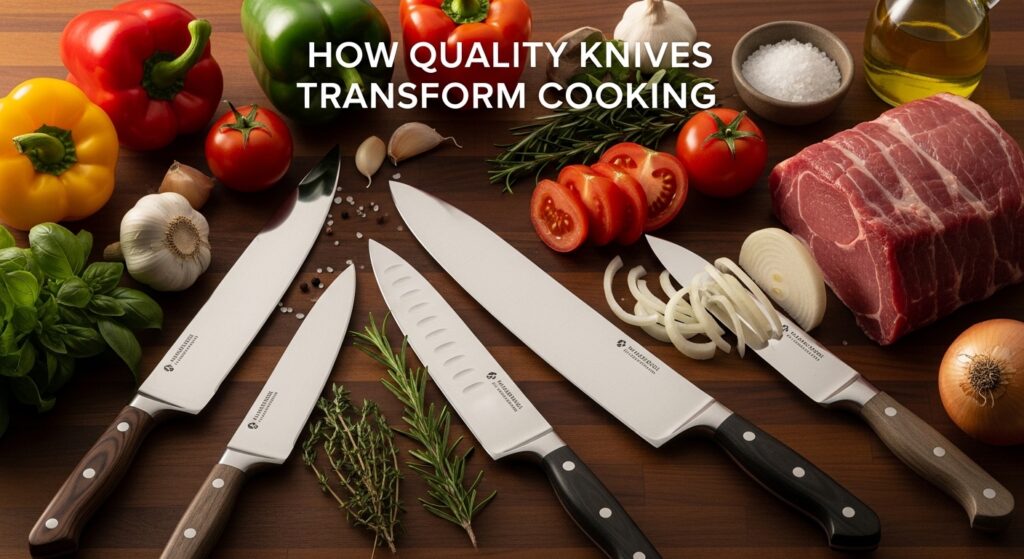
Cooking is an experience shaped by the quality of your tools. Nowhere is this more evident than in the knives you choose. A superior knife is much more than a piece of steel; it becomes a trusted companion, making each cut deliberate and each meal special. From the way it rests in your hand to the effortless movement through an onion or a loaf of bread, a high-quality knife changes the way you work and how you feel about time spent in your kitchen. Those curious about specialized options for outdoor or survival scenarios can further explore ESEE knives and survival gear, which offer additional versatility beyond everyday food prep.
A well-maintained, sharp knife is essential for both professionals and home cooks, streamlining tasks and enhancing creativity in the kitchen. Using a quality knife improves accuracy and provides a sense of safety and control, boosting confidence when chopping, slicing, or mincing.
Understanding the importance of high-quality knives involves recognizing how materials, design, and maintenance enhance your culinary experience. These tools are fundamental, as they affect the presentation, taste, and texture of food.
The evolution of knives reflects advancements in technology and culinary standards. Modern knives blend centuries of knowledge with innovative features, making them a worthwhile investment that elevates cooking to an art form.
Precision and Control
Precision is integral to professional food presentation and effective cooking. High-quality knives offer razor-sharp edges that create uniform slices and neat cuts, which are crucial for even cooking and beautiful plating. Research shows that sharper, well-designed knives give chefs better control, reducing fatigue and enabling intricate techniques such as julienning or chiffonading. With such blades, even amateur cooks can achieve consistency that would otherwise require years of practice.
An ergonomic handle further improves stability, enabling precise wrist movement and reducing strain. Whether dicing delicate herbs or portioning proteins, the combination of quality blade steel and thoughtfully crafted handles allows cooks to focus on technique rather than struggling with their tools.
Efficiency in Food Preparation
Time is often scarce in both home and commercial kitchens. A premium knife can reduce food prep time significantly by slicing through ingredients swiftly and smoothly. This helps in meal planning and aids multitasking by ensuring that chops and slices are consistent on the first try. The difference is especially noticeable when handling dense or fibrous foods, such as pumpkin or root vegetables, where a sharp knife eliminates the need for repeated, forceful sawing.
Furthermore, the time and energy saved ultimately translates to greater enjoyment and creativity. Rather than dreading repetitive chopping, cooks with access to high-quality knives often find food prep more meditative and rewarding. Their attention can shift away from correcting mistakes or cleaning up ragged cuts towards experimenting with new recipes and flavors.
Safety Enhancements
Counterintuitive as it may seem, dull knives are much more dangerous than sharp ones. A blade that doesn’t glide through food requires more force, increasing the risk that it will slip and cause injury. Conversely, a sharp, well-balanced knife allows for predictable, controlled movements that protect both your fingers and your confidence in the kitchen. Keeping blades in top condition is one of the simplest ways to prevent kitchen accidents.
Ergonomic design also plays a role here. Knives that fit well in your hand promote a secure grip, minimizing accidents related to fatigue or loss of control. For parents or newer cooks, proper tool selection and regular maintenance provide a crucial layer of safety as skills progress.
Material and Design Innovations
Today’s knives benefit from remarkable advances in metallurgy and engineering. High-carbon stainless steels are widely used for their toughness and edge retention, while ceramic blades provide lightweight alternatives that resist staining and corrosion. Handles have evolved into ergonomic works of art, crafted from materials like resin-infused wood or non-slip composites, making knives easier and more comfortable to use, even over long prep sessions.
Innovation in the knife world is ongoing, with new coatings, blade geometries, and handle contours emerging every year to address real-world cooking challenges. These updates reflect continuous collaboration between professional chefs and engineers, ensuring that every feature serves a practical purpose. For those looking to stay on the cutting edge of kitchen technology, following major knife manufacturers and culinary publications can provide inspiration for the next upgrade.
Maintenance and Longevity
A quality knife is designed for the long haul, but only if it is cared for correctly. Regular honing keeps blades aligned and sharp, while occasional professional sharpening restores a razor edge when home tools fall short. Storing knives in a block or on a magnetic strip prevents accidental nicks and keeps them ready for use. Avoiding the dishwasher and washing by hand with mild soap further prolongs the life of both blade and handle.
With these habits in place, even premium knives can be handed down through generations. Professional chefs often develop deep attachments to their knives, treating them as extensions of themselves and pairing their use with rituals of care. For home cooks, the reward is a tool that works flawlessly day after day.
Choosing the Right Knife
The market is filled with options, from versatile chef’s knives to specialized models like boning or paring knives. Consider your cooking style and the types of meals you prepare most often. A chef’s knife is a universal staple, but frequent bakers may also want a serrated bread knife, while those working with poultry or fish benefit from flexible boning knives. Learning about blade shapes and edge types can help match your kitchen needs to the perfect tool.
It is also helpful to try different weights and grip styles before committing. The best knife for any cook will be the one that inspires confidence and feels like a natural extension of the hand. Researching online reviews and consulting trusted culinary sources can simplify the decision and ensure you find a knife that will be truly transformative.
Conclusion
High-quality knives are more than a luxury; they are an essential foundation for any successful kitchen. They improve cutting precision, speed up meal preparation, reduce accidents, and introduce a level of comfort and joy to the cooking process. With innovations in material and design and a commitment to regular maintenance, a good knife will last for years, providing endless opportunities to expand your culinary horizons. By investing in the right tools and caring for them properly, you elevate every meal and create a more satisfying, creative kitchen experience.